


Listen to the AI Narrated commentary overview of the post:
July opened not just with fireworks, but with one of the most sweeping legislative packages in recent memory: the One Big Beautiful Bill Act (OBBBA). While the media cycle has largely focused on its political branding and polarizing provisions, I believe it’s more productive to evaluate the bill through a systemic and long-term lens.
Rather than diving into whether deep social cuts were warranted in light of national debt or fiscal priorities, or whether greater investment should have been made in safeguarding the most vulnerable, this write-up aims to unpack what the bill means for: allocators, builders, and systems-level thinkers.
The Good: QSBS Gets Supercharged
Perhaps the most significant opportunity buried inside OBBBA is the long-overdue refresh to Qualified Small Business Stock (QSBS). Historically underutilized, QSBS has functioned as a powerful, but rigid, tool for early investors and founders. Now, it’s more flexible & more generous.
Key changes include:
Tiered Gain Exclusion
3–4 years: 50% exclusion
4–5 years: 75% exclusion
5+ years: 100% exclusion (unchanged)
This adds nuance and timing flexibility to exits—less all-or-nothing, more optimized outcomes.
Per-Issuer Cap Raised: From $10M to $15M, with inflation indexing beginning in 2027.
Eligibility Expanded: Companies with up to $75M in gross assets now qualify (up from $50M).
Clean Cutover: Applies only to QSBS acquired after July 4, 2025. No swapping or clock-resetting allowed.
For early-stage investors like us at Cool Climate Collective, that emphasize being the first believers in frontier solutions, this change alters the risk-reward calculus significantly. We often invest where there’s asymmetry between perception and potential. Now, that same asymmetry just got a further tax-incentivized tailwind.
In essence: our potential upside just got bigger.
The Bad: Energy Turbulence, Solar Headwinds, Rate Surges & the Coming Demand Spike
Outside of the QSBS upgrade, OBBBA sends a much more complex signal to the energy market. While the legislators claimed to promise job creation via industrial and manufacturing investments, it also introduces new headwinds for renewable deployment.
On top of OBBBA, an additional Executive Order signed (to compliment OBBBA’s attack on renewables), "Ending Market Distorting Subsidies for Unreliable, Foreign-Controlled Energy Sources", specifically targets wind and solar, despite these being the cheapest and most scalable clean energy options domestically. The order mandates the end of the Clean Electricity Production Credit (§ 45Y) and Investment Tax Credit (§ 48E) for wind and solar projects.
When one considers solar being the lowest levelized cost of energy, it seems counter-intuitive to energy security and national interests at a time in history where we see unprecedented growing energy demands:
Simultaneously, the rapid expansion of U.S.-based data centers, the digital backbone of everything from national defense to enterprise/consumer AI, and the revival of domestic manufacturing in semiconductors, aerospace, and critical industries.
Heatwaves and extreme weather, now a near-constant in summer months, are further burdening grids and raising air conditioning costs, disproportionately impacting lower-income households and small businesses.
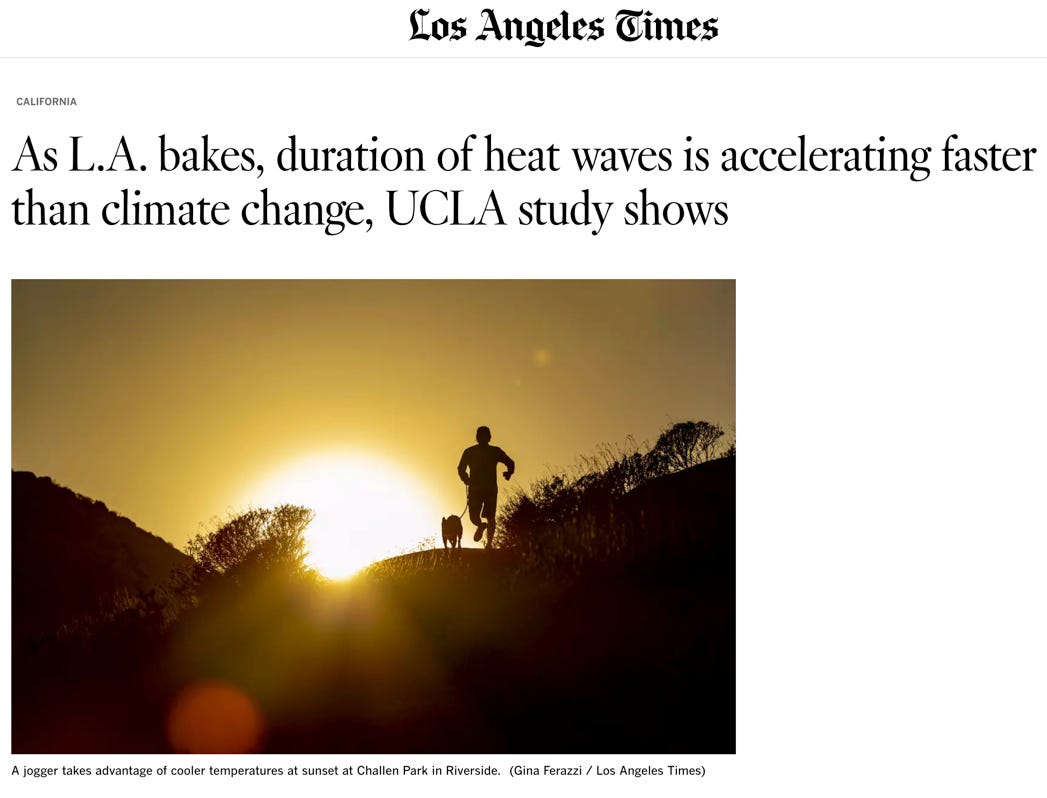
The reality is that we have unlocked a feedback loop that will further strain our energy resources as we aim to cool our ever longer heatwaves, that are not only hotter, but now the data is indicating, that durations are growing faster with each fraction of a degree of warming. The study finds that the longest, most extreme heat waves, which last weeks, are accelerating in duration at a non‑linear, feedback-like pace, outstripping simple linear warming trends.”
The Opportunity: Optimization as Necessity
Here’s where opportunity emerges…
With energy rates trending upward and fossil fuels remaining volatile, energy efficiency becomes a tool to combat spiking energy prices for consumers and businesses alike. Households and commercial spaces that can orchestrate their energy use, time-shift demand, and make intelligent load adjustments will experience less volatility and lower bills.
We’re entering a decade where:
Energy orchestration tools will move from nice-to-have to must-have
Demand-side flexibility will become an asset class in its own right
Efficiency becomes a key economic lever, not just a climate play
It’s not just about producing more, it’s about using what we have far better. Any product that can help consumers or businesses get more from every kWh will be riding a systemic wave.
and the Unknowns…
There’s a deeper concern in this bill, and it’s not about what’s included, it’s what’s left unprotected. My previous piece "When the Data Disappears" from a few months ago, dived into how access to environmental, energy, and emissions data is becoming increasingly politicized. As agencies face restructuring and data portals become gated or decommissioned, investors and startups are flying blinder than ever.
As per Bloomberg, “Doctors are struggling to treat patients with complex sexually transmitted infections as certain types of health data are being purged from public websites. Insurers have lost access to a frequently consulted database of climate and weather disasters. School districts are left to work with a scaled-down version of the nation's report card - critical for allocating resources.”
Without clear data, accountability shrinks. Forecasting becomes guesswork. And systems-level coordination, already hard, is neutered.
If the 20th century was defined by infrastructure buildout, the 21st will be defined by infrastructure intelligence (for existing and any new buildouts). That intelligence depends on data being available intact, and trusted.
Dualities and Dividends
When viewed through the lens of systems investing, OBBBA creates a bifurcated world.
On one side, there is austerity and retrenchment.
On the other, acceleration and alpha.
That duality may seem jarring but it’s precisely in that tension that savvy builders and allocators will find leverage.
The reconfiguration of incentives around QSBS, combined with structural energy stressors, creates a rare moment: high alignment between doing what’s smart economically and what’s necessary… an inevitability when viewed through the lens of system dynamics.
We’ve always believed in getting in early before markets and other investors fully price in what's coming by applying some foresight driven methodologies. With these changes, we’re more convinced than ever that early conviction pays.